The Word "Historic" Is Doing Two Different Jobs in Old West Austin
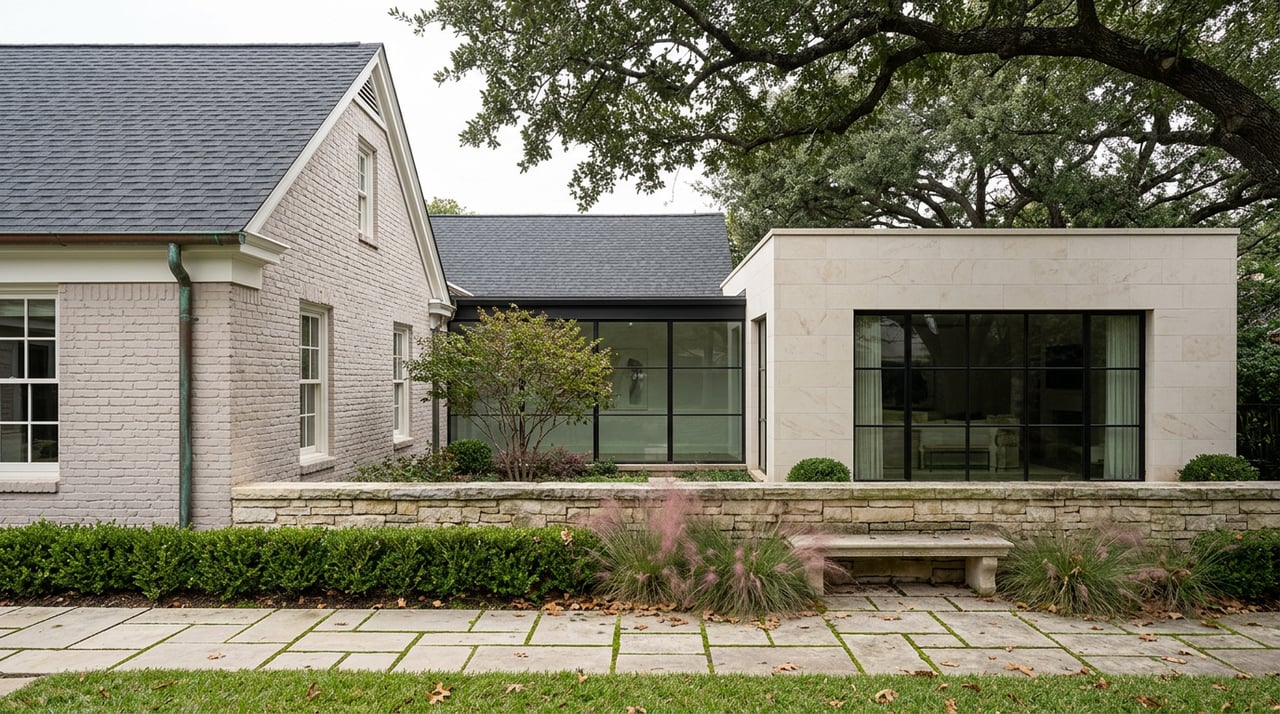
A client walks a lot in Pemberton Heights with a builder already lined up for a near-total rebuild. Somewhere in due diligence, someone mentions the neighborhood is on the National Register of Historic Places, and the plan stalls. The assumption is reasonable: historic district, therefore a Certificate of Appropriateness, therefore a design review board deciding whether the new roofline is acceptable. For most lots in Old Enfield, Pemberton Heights, and Bryker Woods, that assumption is wrong, and knowing why it's wrong changes how you budget a remodel, price a teardown lot, and read a listing that calls itself part of a historic district.
The confusion is understandable because Austin uses "historic" for two different regulatory tools that happen to share a name and, in this pocket of the city, sit almost on top of each other.
Old Enfield, Pemberton Heights, and Bryker Woods were added to the National Register of Historic Places in 2003 as the Old West Austin Historic District, a plateau of homes built between 1886 and 1953 running from Mopac east to Lamar and from 13th Street north to 35th Street. The designation did not come from a desire to control paint colors. It came from a fight over a highway.
By the late 1990s the state was studying an expansion of Mopac, and by 2000 residents across Old West Austin had organized because they believed the project could demolish as many as 80 houses. Getting the neighborhood onto the National Register turned out to be the right lever. Federal law requires added study, review, and approval before federal dollars can fund a project that would demolish properties inside a National Register district, which adds real time and cost to any such plan. Because Loop 1 expansion needed federal money, the designation is credited with keeping the project inside its existing right of way through these neighborhoods.
That is a meaningful outcome for the neighborhood's shape and its tree canopy. It is not, on its own, a restriction on what an individual homeowner can do to a private house. Community Impact's coverage of Austin's local historic district process put the distinction plainly: National Register status does not create tight land-use regulation, while local historic district status does, and that second category is a separate, much smaller thing.
Austin has a handful of Local Historic Districts, and the ones geographically closest to Old West Austin sit mostly across the boundary in Clarksville, not inside Old Enfield, Pemberton Heights, or Bryker Woods themselves.
| Local Historic District | Approximate boundary | Scale |
|---|---|---|
| Castle Hill | W 12th to W 6th, Baylor to Shelley | 39 acres |
| Harthan Street | W 6th to W 7th (one block) | 10 houses, 9 contributing |
| Smoot/Terrace Park | W 9th to W 6th, Pressler to Highland | 81 principal buildings, 52 contributing |
Inside these three districts, the rules are exactly what people picture when they hear "historic district." Any non-routine exterior work that needs a building permit requires a Certificate of Appropriateness from the Historic Landmark Commission, and window or door replacement needs one even when no permit is otherwise required. Ordinary repainting and like-for-like repair are exempt, but additions, new construction, roof material changes, and driveway or sidewalk work all go through review. Smoot/Terrace Park only became Austin's sixth Local Historic District after an 8-3 City Council vote in 2018, so it is a relatively recent addition to that list.
None of the three sits inside the Old Enfield, Pemberton Heights, or Bryker Woods boundary that carries the National Register designation. The Historic Landmark Commission still reviews exterior, demolition, and relocation permits for properties inside a National Register district, but it can only recommend protective steps there, not require them, which is the practical difference a buyer or seller needs to understand before assuming a remodel timeline.
Two things cut across both categories and matter more, day to day, than the historic designation itself.
The first is Austin's urban forest ordinance, which protects certain trees by species and size regardless of whether the lot sits in a historic district at all. Removing a protected or heritage tree generally requires a permit, and a substantial renovation or teardown typically needs a tree protection plan covering canopy, root zone, and soil. If a pool, addition, or driveway crosses into a protected root zone, expect an arborist assessment and a possible redesign before the city signs off. Mature oaks are part of what makes these blocks feel the way they do, and that same canopy is often the actual constraint on a build, not the historic label on the neighborhood.
The second is that an individual house, on any lot, can seek its own historic landmark zoning independent of district boundaries. That requires meeting at least two criteria under the city's land development code, most commonly architectural merit or historical association, approval by City Council, and an affidavit showing the property needs tax relief to encourage its preservation. A house can be inside the National Register footprint with no local district restrictions and still carry individual landmark protections if a prior owner pursued that status. Checking a specific address against the city's historic overlay map, not just the neighborhood name on a listing, is the only way to know for certain.
The same block-by-block logic shows up in price data. Redfin figures for the three months ending May 2026 put the median sale price for Old West Austin at $1.6 million, up 10.7 percent from the same period a year earlier, with a median price per square foot of $697, down 6.6 percent, and homes selling in 43 days on average compared with 51 days the year before. A different boundary definition for what is nominally the same footprint, reported for the identical May 2026 window, puts the median closer to $1.35 million with a price per square foot around $615 and a 96.2 percent sale-to-list ratio.
That is roughly a quarter-million-dollar swing in "the" median for the same month, produced entirely by which streets a given data provider draws into the neighborhood polygon. For context, Austin's citywide median sale price over the three months ending June 2026 was $557,000, so even the lower of the two Old West Austin readings sits at more than double the city figure. The gap between the two neighborhood-level numbers matters more for a buyer's actual decision than either number does on its own, because it is direct evidence that a composite median is not pricing your block. It is averaging across streets that may or may not carry the same tree canopy, lot depth, or renovation history as the one you're standing on.
Is this specific address inside a Local Historic District, or just the National Register footprint? The city's historic overlay map and property records will show which applies. Old Enfield, Pemberton Heights, and Bryker Woods addresses are typically National Register only, but confirm rather than assume, especially near the Clarksville boundary.
Does this house carry individual historic zoning? That is separate from district status and can exist on either side of the line.
What is actually on this lot, tree-wise? A tree inventory and arborist opinion will tell you more about your buildable footprint than the historic designation will.
How long should I budget for approvals? A straightforward remodel on an unconstrained lot can move quickly. A teardown or major addition on a site with protected trees, in a Local Historic District, or both, often needs three to six months for approvals before construction even starts.
If you're weighing a remodel, a rebuild, or a purchase inside the Old West Austin footprint, or comparing it against a lot in neighboring Clarksville where the actual Certificate of Appropriateness rules apply, the distinction above is the first thing worth resolving, before a builder bid or a listing price sets your expectations. Kumara Wilcoxon has spent two decades reading this market block by block. If you'd like a straight read on what a specific address in this district can and cannot do, or a current sense of what your home is worth in today's market, reach out to start that conversation.
Stay up to date on the latest real estate trends.



An Insider's Guide to Luxury Homebuying in Austin.
Global Connections. Local Expertise. World Class Marketing.
Let me know how I can assist you.
