By Kumara Wilcoxon
The most extraordinary smart homes do not announce themselves. There are no walls covered in screens, no countertops crowded with devices, no visible reminder that technology is present at all. What there is, instead, is a home that simply works beautifully. Lights that respond to the time of day without being asked. A room that is always the right temperature before anyone thinks to adjust it. Shades that shift with the afternoon sun while a conversation continues uninterrupted. Music that follows seamlessly from room to room. A front door that recognizes its owner and unlocks without a key being touched.
This is the standard that the most sophisticated residential properties in Austin are now reaching, and it represents a fundamental reorientation of what smart home technology is for. The conversation has moved away from gadgetry and toward something far more compelling: the creation of homes that feel effortless, intuitive, and deeply attuned to the people who live in them.
Kumara Wilcoxon works with buyers and sellers across Austin's most distinguished neighborhoods and observes consistently how seamlessly integrated technology has become one of the defining characteristics of properties that command genuine admiration and lasting value.
Key Takeaways
- The most desirable smart homes of 2026 are defined by invisible integration rather than visible technology, with automation supporting lifestyle and design rather than competing with it
- Lighting automation, including circadian rhythm programming and scene-based control, is among the most transformative and highest-value technologies available to Austin luxury homeowners
- Wellness technology including infrared saunas, circadian lighting, air quality monitoring, and acoustic design has become an expected feature in Austin's upper residential tier
- Automated climate and shading systems work in concert to create interiors that respond intelligently to Austin's demanding seasonal conditions without requiring manual intervention
- Privacy and security systems at the luxury level are designed to be architecturally invisible while delivering comprehensive protection and remote access management
- Whole-home audio and automated shading are most powerful when conceived as unified systems during construction or renovation rather than assembled individually over time
- The network infrastructure underlying a smart home is its most critical and most overlooked component, determining whether every other system performs as intended
- Technology that is professionally designed, coherently integrated, and simple to operate consistently enhances both the living experience and the market performance of Austin luxury properties
Lighting That Lives With You
Of all the technologies available to luxury homeowners today, few are as transformative in daily experience or as immediately apparent during a property showing as thoughtfully designed lighting automation. Light shapes how a home feels at every hour, and a system that responds intelligently to the rhythm of the day creates an interior environment that feels alive and considered in a way that static lighting simply cannot achieve.
The most sophisticated residential lighting systems, led by Lutron's Caseta and RadioRA platforms, operate almost entirely in the background. Scenes are programmed once and activated by a single touch, a voice command, or simply by the passage of time. A morning scene might bring the kitchen and primary suite to a bright, energizing color temperature that supports focus and wakefulness. By evening, the same home transitions automatically to warmer, lower tones that signal the body to unwind. Guests experience a home that feels exquisitely calibrated without ever encountering a complicated interface or a wall crowded with switches.
Circadian rhythm lighting has emerged as one of the most meaningful intersections of technology and wellness design in the luxury residential market. By replicating the natural arc of daylight across the interior environment, these systems support the body's hormonal rhythms, improve sleep quality, and reduce the fatigue associated with prolonged exposure to static artificial light. In Austin's luxury market, where wellness amenities are increasingly central to buyer expectations, circadian lighting speaks directly to a sophisticated audience that understands the connection between environment and health.
Exterior lighting automation adds a dimension of both beauty and security, with programmable landscape and architectural lighting that shifts seasonally, responds to occupancy, and creates the kind of evening curb presence that elevates a property's character and perceived value in the eyes of neighbors and prospective buyers alike.
Climate and Shading as a Single Intelligent System
Austin's climate places genuine demands on residential properties. The sustained heat of Central Texas summers, the dramatic temperature swings of spring and fall, and the occasional hard freeze of winter create conditions that require a home to be not just comfortable but genuinely responsive. The most sophisticated approach treats climate control and window automation as a single integrated system rather than independent technologies.
Automated shading from Lutron, Hunter Douglas, and other professional-grade providers allows motorized window treatments to respond to solar intensity, time of day, and programmed scene selections, blocking the harsh afternoon sun that characterizes Austin's western exposures during summer without sacrificing the natural light and Hill Country views that make the city's finest properties so compelling. When shading automation is integrated with a smart thermostat and a zoned HVAC system, the result is an interior environment that maintains comfort and manages energy consumption intelligently, adjusting continuously to conditions that a homeowner would never think to monitor manually.
For Austin's larger estate properties, zoned climate control is not simply a convenience. It is a statement of design intelligence, ensuring that every space in the home, from the primary suite to a guest wing to a dedicated library or study, maintains its own ideal conditions regardless of what is happening elsewhere in the structure.
Wellness Technology Woven Into the Architecture
The wellness-centered home has become one of the defining aspirations of luxury residential design in 2026, and technology is the infrastructure that makes it possible. At the highest level of integration, wellness technology disappears entirely into the architecture of the home, present in the quality of the air, the character of the light, the temperature of the water, and the silence that surrounds a space without any visible apparatus announcing itself.
Whole-home air quality monitoring and filtration systems maintain interior air at a standard that most homeowners have never experienced, continuously measuring particulate matter, volatile organic compounds, humidity levels, and carbon dioxide concentration, and responding automatically to keep conditions within the optimal range for cognitive clarity and physical comfort.
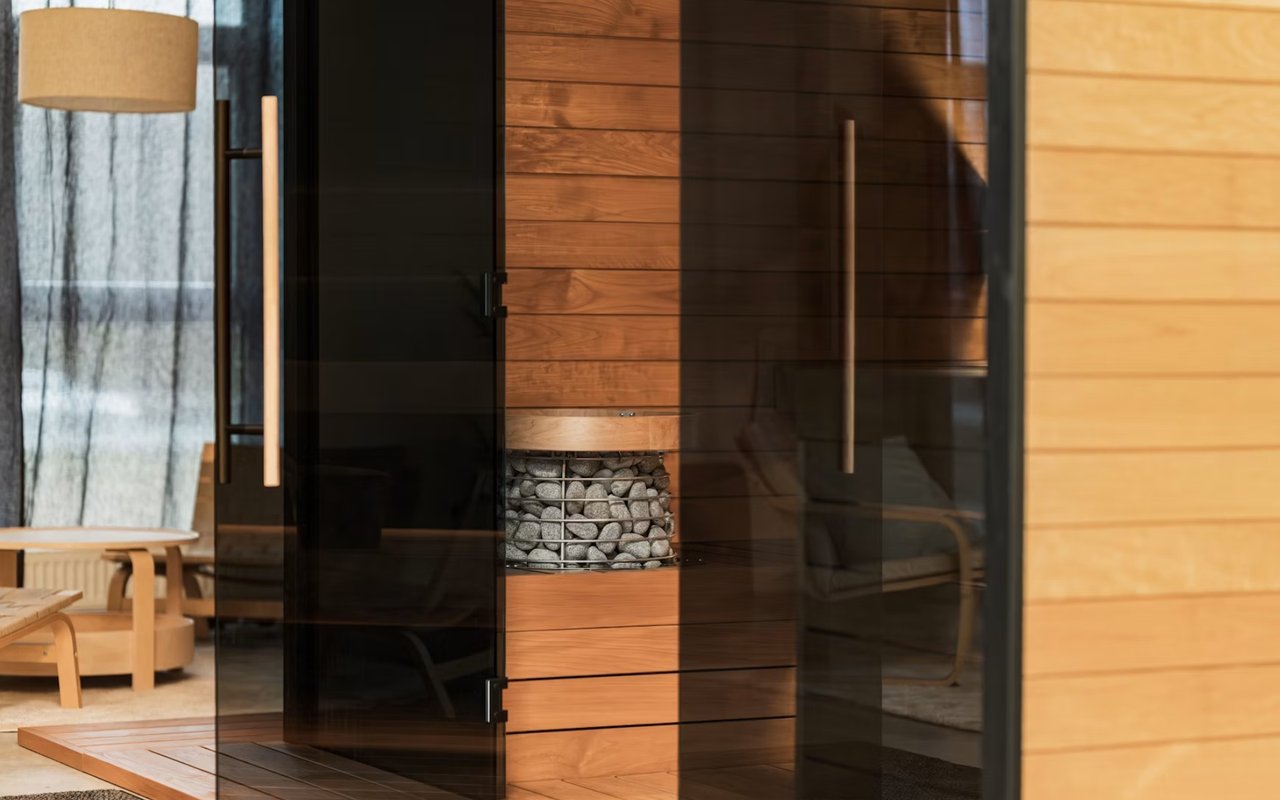
In Austin, where cedar fever season and wildfire smoke events can significantly degrade outdoor air quality, a home that maintains pristine interior conditions regardless of what is happening outside is not a luxury in the abstract sense. It is a daily and tangible benefit. Infrared saunas, cold plunge systems, steam showers, and spa-caliber primary bathrooms are increasingly designed as architectural elements rather than equipment installations, built into the fabric of the home with the same attention to material and proportion that governs every other design decision. The technology that powers these spaces, including precise temperature control, chromotherapy lighting, and integrated audio, operates invisibly behind beautifully finished surfaces.
Acoustic design represents one of the most underappreciated dimensions of residential wellness technology. Professionally designed sound insulation between rooms, acoustic ceiling treatments, and strategic material selection create interiors of remarkable quiet that feel immediately restorative upon entering. For Austin homeowners navigating busy professional lives and vibrant urban environments, a home that offers genuine acoustic sanctuary is a deeply compelling amenity.
Privacy and Security Without Compromise
Security and privacy at the luxury residential level are designed to function with the same invisibility that defines the best smart home technology across every other category. The goal is comprehensive protection that never intrudes on the aesthetic experience of the home or creates the impression of surveillance within one's own private spaces.
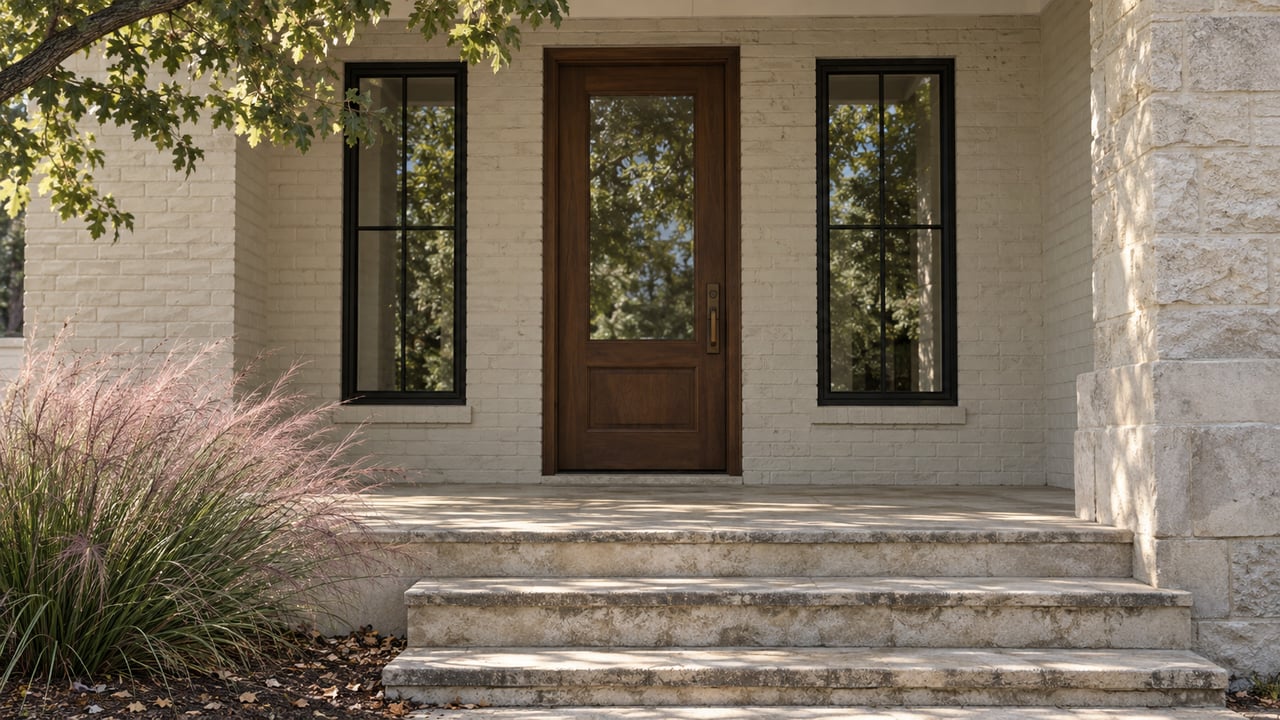
Professionally designed security systems integrate exterior camera coverage, perimeter monitoring, smart access control, and central response capabilities behind architectural elements that are intentionally unobtrusive. Camera housings are selected and positioned to complement rather than interrupt the exterior design of the property. Smart lock systems from brands including Schlage and Yale replace visible keypad hardware with clean, architectural lever designs that reveal nothing of the sophisticated access management operating beneath the surface.
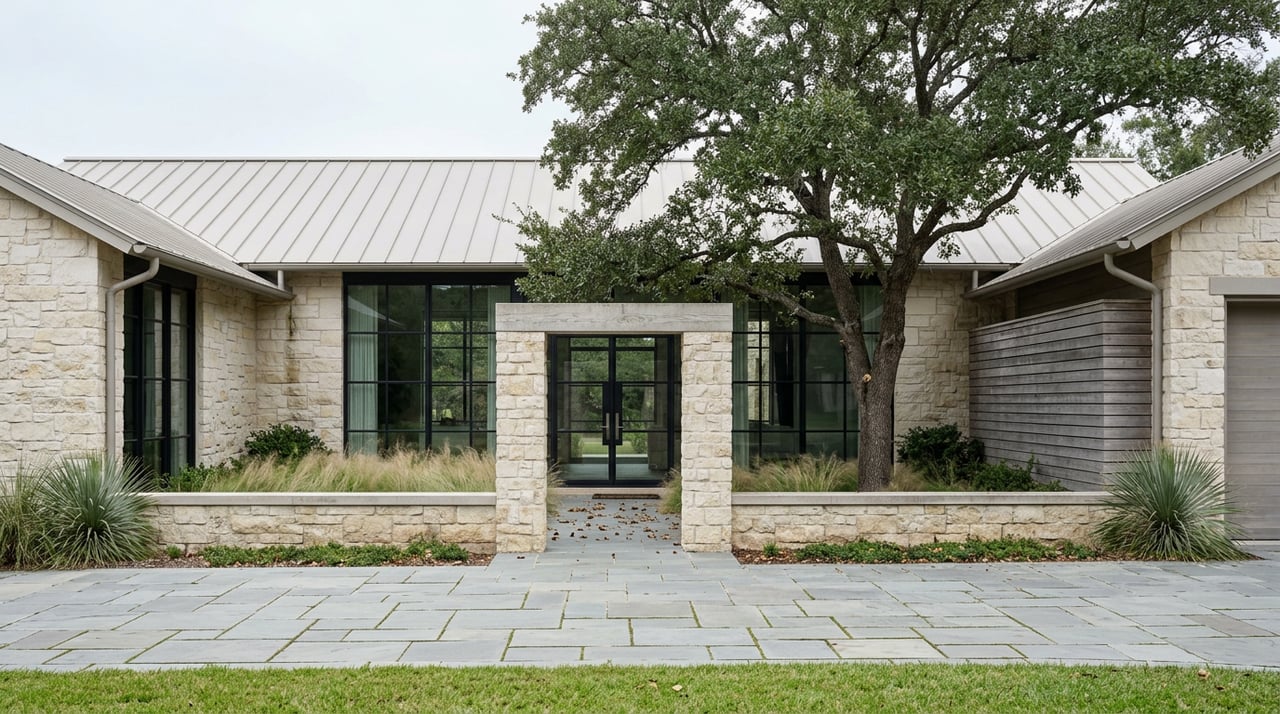
For Austin's most distinguished properties, including estates in Westlake Hills, Barton Creek, and the gated communities of Rollingwood and Circle C, privacy management extends to the digital layer as well. Enterprise-grade network security, separate guest and primary device networks, and professionally managed firewall systems ensure that a home's connected infrastructure is protected with the same rigor applied to its physical perimeter.
Remote access management allows homeowners to monitor, grant access, and respond to security events from anywhere in the world with the same ease as adjusting a thermostat, a capability that has become especially valued among Austin's frequent travelers and second-home owners who move between properties throughout the year.
The Invisible Infrastructure That Makes Everything Possible
Behind every seamlessly functioning smart home is a network infrastructure that most visitors will never see and rarely consider. It is also the element that most frequently separates a smart home that performs beautifully from one that frustrates its occupants daily. A professionally designed network is not a feature. It is the prerequisite for every other feature operating as intended.
Enterprise-grade mesh networking from providers including Ubiquiti UniFi and Cisco Meraki creates the kind of seamless, high-performance wireless environment that allows every integrated system, from lighting control to security cameras to whole-home audio, to operate without lag, dropout, or the interference that plagues consumer-grade network equipment in larger homes. Structured ethernet cabling to key locations throughout the property provides a hardwired backbone for the most demanding applications and ensures that the home's technological infrastructure has the same permanence and reliability as its plumbing or electrical systems.
The choice of a unified control platform, whether Crestron, Control4, or Savant, determines how coherently all of a home's systems communicate and how elegantly they can be managed. The best platforms present a single, intuitive interface that puts every aspect of the home's environment within reach of a touch, while operating automatically with such reliability that the interface is rarely needed at all.
Frequently Asked Questions About Smart Home Technology and Austin Luxury Real Estate
How does integrated technology affect the value of a luxury home in Austin?
Technology that is professionally designed, coherently integrated, and architecturally invisible consistently enhances both the experience of a home and its market performance. Buyers at the upper end of Austin's market expect these systems to be present and to function seamlessly. A property that delivers on that expectation commands stronger interest, generates more competitive offers, and sells with greater confidence than one where technology feels absent or poorly executed.
What is the difference between a smart home and a truly integrated home?
A smart home has connected devices. A truly integrated home has a unified system in which lighting, climate, security, audio, shading, and wellness technology all communicate with one another and respond to the occupant's life as a single coherent environment. The distinction is the difference between a collection of apps and a home that thinks for itself. Kumara Wilcoxon helps buyers understand and evaluate this distinction during the property search process.
Which technology investments should Austin homeowners prioritize before listing?
Lighting automation and scene programming, automated shading, and a professionally installed security system with clean exterior hardware consistently generate the strongest buyer response in Austin's luxury market. These are the systems most immediately apparent during a showing and most directly connected to the feeling of elevated, effortless living that buyers at this level are seeking.
How should buyers evaluate smart home integration when touring a luxury property in Austin?
Beyond the presence of individual devices, buyers should ask whether all systems operate under a single control platform, whether the network infrastructure is professionally installed and documented, and whether service agreements and warranties transfer with the property. Kumara Wilcoxon guides buyers through these questions with the experience and technical awareness that comes from years of working within Austin's luxury residential market.
Is it possible to add integrated technology to an older Austin home without compromising its architectural character?
Absolutely, and it is done beautifully in many of Austin's most distinguished historic and mid-century properties. Wireless lighting control systems, architecturally integrated speaker designs, and minimally invasive security hardware allow sophisticated technology to be introduced into older homes without disrupting the character and materials that make those properties irreplaceable. The key is working with integrators who understand design as fluently as they understand technology.
Experience Austin Luxury Living With Kumara Wilcoxon
The homes that define Austin's luxury market in 2026 are the ones where design, lifestyle, and technology exist in seamless alignment, where every system supports the quality of daily life without announcing its presence. Finding a property that achieves that standard, or preparing one to present at that level, requires the guidance of a real estate professional who understands both the market and the sensibilities of its most discerning participants.
Connect with Kumara Wilcoxon and begin exploring Austin's finest properties today.