The Halloween Party Bryker Woods Built Because the Neighbors Were More Festive
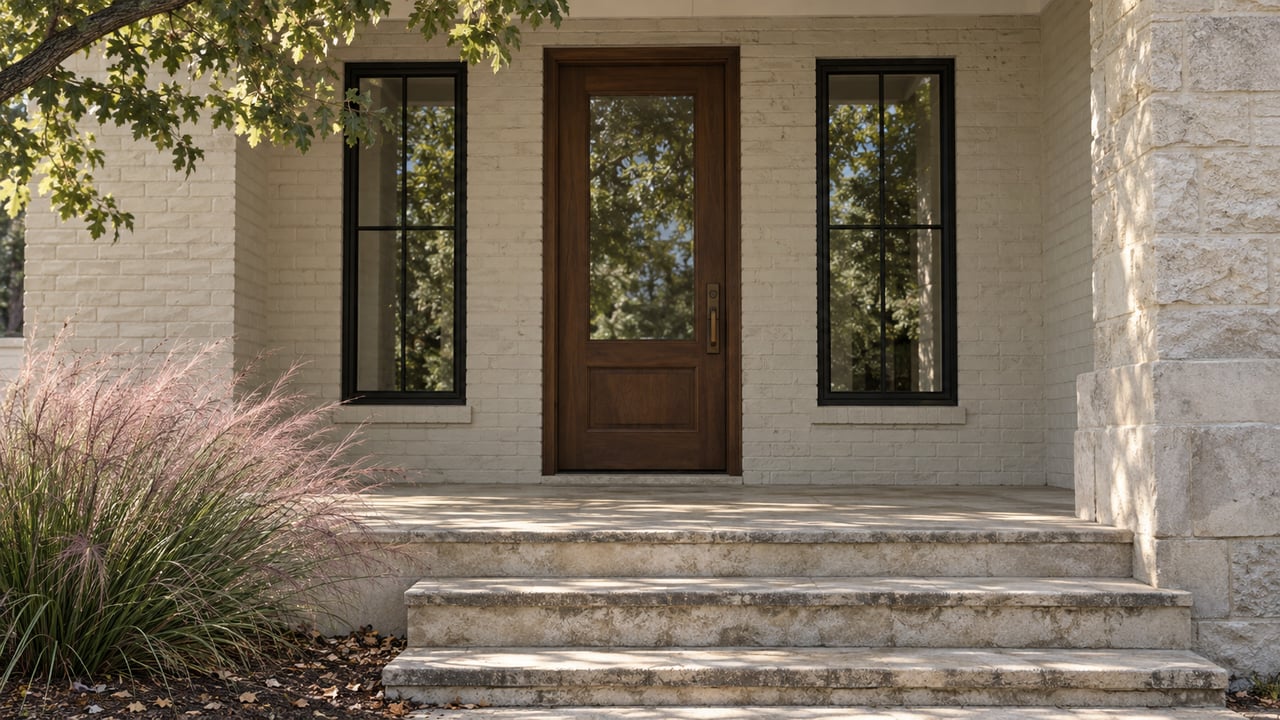
For a while, the kids in Bryker Woods didn't trick-or-treat in Bryker Woods. They crossed south into Pemberton Heights instead, because Pemberton's version of Halloween had more going on. One longtime resident described the situation plainly to CultureMap Austin:
"Our children were leaving on Halloween to go trick-or-treating in nearby Pemberton because it was more festive."
So the neighborhood built its own. A bounce house went up. An outdoor movie screen. Face painting, music, the whole production, assembled by parents who decided that losing the neighborhood's own kids to the block over was not a problem to shrug off. It has run as a yearly fixture ever since, one of Bryker Woods' recognizable autumn traditions.
That story is funny on its own, but it also says something true about how Old West Austin actually works. The historic district is one name on a map, added to the National Register in 2003 and built out between 1886 and 1953, but it is made up of three separately identified neighborhoods: Old Enfield, Pemberton Heights, and Bryker Woods. Each has its own street grid, its own elementary campus as a landmark, its own walking radius to daily errands. When a shared amenity does not reach a particular pocket of that grid, residents in that pocket tend not to wait around. They build the version they wanted.
If there's a piece of ground that belongs to all three neighborhoods at once, it's Pease Park, and this fall it's in the middle of a restoration that has been running for years and is scheduled to keep running through the season.
The project covers Windsor Hillside, a 226,593-square-foot slope inside the park where, when Pease Park Conservancy first proposed the restoration to the city in January 2023, more than 80% of the plant cover was invasive species: cat's claw, chinaberry, Japanese ligustrum, Chinese tallow. The slope also carries a steep average grade of 13.7%, which makes erosion control part of the job alongside the planting. Texas Conservation Corps crews have been contracted for the work from spring 2024 through fall 2026, cutting invasives in phases and hand-watering new native plantings, including pigeonberry, cedar elms, and youpon holly, until they take. A $49,000 Urban Forestry Grant has helped fund the removal work, according to the city's own account of the project.
That timeline matters for anyone walking through the park this season. The work is not finished and it is not a memory. It's happening right now, on a schedule that runs out this fall, which is a different thing to encounter on a walk than a park that simply looks the way it always has.
The park sits at a point that Old Enfield, Pemberton Heights, and Bryker Woods residents all reach by different routes, and it's supplemented by trail connections that do the same stitching work. The Shoal Creek Trail System runs from 38th Street down to Lady Bird Lake, passing directly behind Bryker Woods Elementary before continuing through multiple public parks on its way south. The Johnson Creek Trail picks up separately, running from Deep Eddy Park northward into the district, giving cyclists and walkers another way into the wider trail network without touching a street.
Pease Park Conservancy's current fall lineup, posted in late August, runs through a mix of recurring and one-off programming: puppet shows, honky-tonk two-stepping, soundbaths in the Treehouse, birding and mothing walks, toddler yoga, beginner biking sessions, and a running series called Lives Remembered that focuses on Black history connected to the park.
A few dates worth having on hand this season:
The full calendar, including exact times, is maintained on Pease Park Conservancy's site and updated on Do512's park listing, since some sessions add dates as the season goes on.
The Halloween party is the biggest example of a Bryker Woods resident deciding to solve a problem privately, but it's not the only one. On 32nd Street, a resident installed a Little Art Exchange, a small box where kids and adults leave and take homemade art the way a Little Free Library works for books. It's a tiny fixture, unadvertised beyond the block it sits on, and it exists because someone in the neighborhood thought the street could use one and built it rather than proposing it to anyone.
That pattern tracks with the geography. The neighborhood's best-known walkable café corridor sits along West 6th Street and West Lynn, closer to the southern edge of the historic district near the Clarksville line than to the Bryker Woods grid up near 32nd and 38th Streets. Clark's Oyster Bar anchors a small cluster of restaurants there alongside Josephine House, Swedish Hill, Pecan Square Cafe, and Better Half Coffee & Cocktails on Walsh Street. In Bryker Woods proper, Olive & June serves as the neighborhood's own sit-down option, and Donn's Depot, a bar built into a real train car that's operated since the 1970s, still holds down its stretch of the district on its own terms.
None of that is a complaint about distance. It's the same logic as the Halloween party: when the shared corridor is a longer walk from one pocket of the neighborhood than another, that pocket tends to keep its own anchor points rather than treating the shared version as good enough.
The same split shows up in how each neighborhood uses outdoor space day to day. Down toward Old Enfield, West Austin Park on Nau Avenue carries a community pool, tennis courts, and a dog park in one stretch of green, drawing families and pet owners from that end of the district. Over in Pemberton Heights, Triangle Park serves a similar role at a smaller scale, and newer trail connections at The Grove development have added another option nearby. Up in Bryker Woods, the go-to green space for most daily use is simpler: the playground and grounds around Bryker Woods Elementary itself, with the Shoal Creek Trail as the exit route toward everything else.
None of these serve as a substitute for the others. A resident near Nau Avenue isn't walking a dog to the Bryker Woods Elementary playground, and a Bryker Woods family isn't making the community pool at West Austin Park part of a weekday routine. Each pocket of Old West Austin has settled into its own version of the same basic amenities, which is exactly why a shared project like the Windsor Hillside restoration matters more than it might elsewhere. It's one of the few pieces of infrastructure that actually asks all three neighborhoods to use the same ground at the same time.
That's worth remembering the next time someone describes Old West Austin as a single, uniform pocket of Central Austin. The zip code is uniform. The zoning history is shared. But the daily version of the neighborhood, the one measured in which coffee shop is a five-minute walk versus a fifteen-minute one, which park has the dog run, which Halloween party your kids actually want to attend, still runs on three separate clocks that happen to sit inside the same historic boundary.
If you're weighing what a specific block in Old Enfield, Pemberton Heights, or Bryker Woods actually offers day to day, Kumara Wilcoxon has spent enough seasons in this district to know which pocket you're really asking about.
Stay up to date on the latest real estate trends.


An Insider's Guide to Luxury Homebuying in Austin.
Global Connections. Local Expertise. World Class Marketing.
Let me know how I can assist you.
