By Kumara Wilcoxon
Austin's real estate market has always commanded attention. During the pandemic years, it became something of a national obsession, drawing relocation buyers from San Francisco, New York, and Chicago, fueling bidding wars that pushed prices to extraordinary heights, and transforming neighborhoods almost overnight.
That era has passed. The market operating in Austin today is a fundamentally different one, and understanding its current dynamics with clarity and precision is essential for anyone considering a purchase, a sale, or a strategic real estate decision in Central Texas.
Kumara Wilcoxon works with buyers and sellers across Austin's most distinguished neighborhoods and brings a grounded, data-informed perspective to every client conversation. The picture that emerges from current market data is not a cause for alarm. It is, in fact, a cause for measured optimism, provided one understands the nuances that broad headlines often obscure.
Where Austin Home Prices Stand in 2026
As of March 2026, the median sales price for the Austin metro as a whole was $426,220, down approximately three percent year-over-year. For context, Austin home prices are down roughly 24 percent from their May 2022 peak of approximately $551,961. That correction, while meaningful in percentage terms, reflects the unwinding of an extraordinary and historically unusual run-up rather than any fundamental deterioration in the city's long-term value proposition.
The average Austin home value sits at approximately $512,937, down 6.8 percent over the past year. Data tells a slightly different story at the city level, with the median sale price for the city of Austin itself at approximately $530,000 in March 2026, also down about two percent compared to the prior year, with homes selling after an average of 58 days on the market.
The discrepancy between these figures reflects the difference between metro-wide data, which includes surrounding counties, and city-specific numbers. Travis County, which encompasses the city of Austin proper, continues to carry premium pricing relative to the broader metropolitan statistical area. Travis County saw median prices fall four percent from last year to just under $500,000, while home sales increased by four percent year-over-year with 1,210 homes sold in March alone.
Inventory, Days on Market, and What They Signal
The inventory picture in Austin is one of the defining features of the current market, and it tells a story that is notably favorable for buyers. As of March 2026, the Austin metro had 5.5 months of housing inventory and 10,867 active listings, with homes spending an average of 85 days on the market.
Active listings have increased 4.5 percent compared to the prior year, bringing buyers considerably more flexibility while sellers adjust to a more deliberate pace of demand. The increase in both inventory and days on market is a direct reflection of a market rebalancing after years in which supply was critically constrained and buyers had virtually no negotiating leverage.
For perspective, the most current data as of late April 2026 shows the Austin area MLS carrying 16,097 active residential properties and 5,281 pending properties, with an Activity Index of 24.70 percent. New listings are down 3.5 percent year-over-year while pending contracts are up 3.6 percent, suggesting buyer demand is beginning to outpace new supply as spring momentum builds. That pending contract growth is a meaningful early signal that the market may be approaching an inflection point.
The Luxury Segment: Resilient but Selective
Austin's ultra-luxury and high-end residential market has behaved somewhat differently from the broader market throughout the correction cycle, and that distinction matters enormously for the buyers and sellers Kumara Wilcoxon serves. In the luxury segment priced above two million dollars, sold listings have shown increases while prices have remained relatively stable, though days on market have grown to approximately 111 days and inventory remains elevated at around 16 months of supply.
This combination reflects a market where qualified luxury buyers remain active and willing to transact, but where the days of underpriced listings attracting immediate multiple offers have been replaced by a more deliberate, research-driven buying process. Sellers at the top of the market must present properties with exceptional quality, accurate pricing, and sophisticated marketing to attract the discerning buyers who make this segment move.
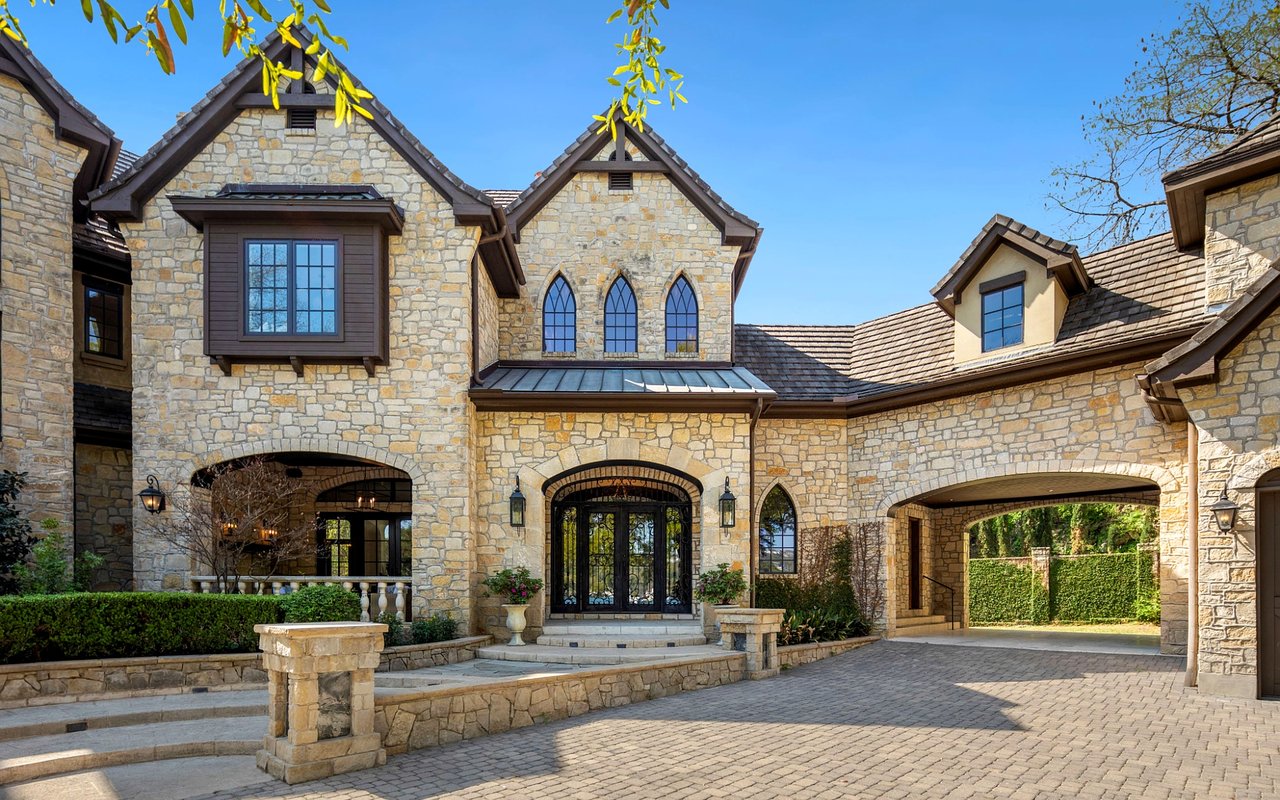
Westlake Hills, Rollingwood, Tarrytown, Barton Creek, and other premier Austin addresses continue to hold their desirability and their relative value premium. The Westlake zip code of 78746 remains the highest-value market in the metro, with a typical home value of approximately $1.66 million according to Zillow's Home Value Index.
These neighborhoods have historically demonstrated stronger price resilience through market corrections, and that pattern has continued through the current cycle.
What Is Driving the Correction
Understanding why Austin's market has cooled is as important as understanding the numbers themselves. Several intersecting forces have shaped the current environment, and each carries implications for the outlook ahead.
The most significant factor has been mortgage rates. Interest rates in the 6.5 to 7.0 percent range have tempered buyer enthusiasm compared to peak years, cooling bidding wars and extending days on market, while simultaneously benefiting long-term buyers and investors by reducing competitive pressure and expanding negotiating leverage.
The second major driver has been supply. Austin overbuilt during the remote-work migration wave, with new construction flooding the market, and supply has been running ahead of demand ever since. Compounding this, Texas has seen some of the steepest increases in homeowner insurance costs in the country due to storm exposure and weather-related risk, raising the true monthly cost of ownership even in neighborhoods where list prices have fallen.
The third factor is the reversal of pandemic-era migration patterns. Austin attracted enormous relocation volume from technology-sector workers and remote employees between 2020 and 2022. The return-to-office trend among major employers has moderated that inflow, reducing one of the primary demand drivers that fueled the peak.
The 2026 to 2027 Forecast: Stabilization on the Horizon
The consensus among Austin market analysts points toward a period of stabilization and gradual recovery rather than continued significant price decline. Most mainstream forecasts anticipate the price correction bottoming out sometime in 2026, followed by a stabilization period where home prices remain relatively flat or grow modestly in the one to three percent range annually, with the market feeling considerably more balanced as a result.
The spring 2026 momentum, with pending contracts rising 3.6 percent year-over-year and absorption improving, suggests buyer demand is genuinely present and responding to current pricing conditions.
This is an important distinction. The Austin market is not experiencing a demand collapse. It is experiencing a price discovery process as buyers and sellers find equilibrium after an extraordinary period of dislocation.
Looking further ahead, historical recovery patterns suggest that by 2027, as market health indicators improve, annual price growth could potentially accelerate into the five to seven percent range, pushing prices toward the $475,000 to $482,000 level from a current median base.
These projections carry appropriate uncertainty, but they reflect Austin's long-standing fundamentals: strong employment anchored by the technology sector and major institutions, continued population inflow, a quality of life that remains compelling on a national scale, and a long-term compound annual appreciation rate that, measured across 25 years, stands at approximately 4.5 percent, capturing the full cycle history including the dot-com bust and the 2008 financial crisis.
What This Market Means for Buyers
For buyers, the current environment in Austin represents one of the most genuinely favorable entry points the city has offered in nearly a decade. More attainable pricing is creating new opportunities to enter the market with greater confidence, particularly for buyers who were priced out during previous years. Inspection contingencies, repair requests, and price negotiations that were essentially impossible during the 2021 and 2022 frenzy are now a normal and expected part of transactions.
Buyers working with Kumara Wilcoxon benefit from a deep, neighborhood-specific understanding of where value exists in the current market, which properties are genuinely well-priced, and how to structure offers that are competitive without overpaying in a market that continues to favor patience and precision.
What This Market Means for Sellers
Sellers entering the market in 2026 need to approach pricing and presentation with a level of rigor that was less critical during the peak years. The days of simply listing and expecting accelerating price growth are behind us. Homes must be staged, priced accurately, and marketed thoughtfully, with flexible terms and readiness to adjust pricing to unlock buyer interest.
A well-prepared, correctly priced home in a desirable Austin neighborhood continues to attract serious buyers and achieve strong outcomes. The difference is that achieving those outcomes now requires strategy, expertise, and the kind of attentive, personalized representation that Kumara Wilcoxon delivers to every seller.
Frequently Asked Questions About the Austin Real Estate Market in 2026 and 2027
Is now a good time to buy a home in Austin?
For buyers who are financially prepared, 2026 represents one of the strongest buying opportunities Austin has offered since before the pandemic. Prices are meaningfully below their 2022 peak, inventory is healthy, days on market have extended, and buyers carry negotiating leverage that was entirely absent during the peak years. The strategic question is not whether to buy, but which neighborhoods and properties offer the strongest long-term value at current pricing levels.
Will Austin home prices continue to fall in 2026 and 2027?
The consensus among market analysts points toward a bottoming of the correction sometime in 2026, followed by gradual stabilization and modest recovery. Further modest softening remains possible in the near term, but a significant additional decline is not the base case scenario given Austin's underlying economic fundamentals and the buyer demand already visible in current pending contract data.
How does Austin's luxury market compare to the broader market?
The luxury segment above two million dollars has shown more resilience in pricing than the broader market, with transaction volume actually increasing even as days on market have extended. Buyers at this level are highly qualified, deliberate, and focused on quality and value rather than urgency. Sellers of luxury properties need sophisticated, targeted marketing strategies to connect with this audience effectively.
What neighborhoods in Austin are holding their value best?
Established luxury neighborhoods including Westlake Hills, Rollingwood, Tarrytown, and Barton Creek have demonstrated consistent price resilience relative to the broader metro. Within the city itself, well-located properties in walkable, amenity-rich neighborhoods continue to attract sustained demand. Kumara Wilcoxon provides buyers and sellers with specific, neighborhood-level market analysis that goes well beyond metro-wide averages.
What should sellers do differently in the 2026 market compared to 2021 and 2022?
Pricing accuracy from day one is the single most important shift. Overpriced listings accumulate days on market, attract price reduction requests, and ultimately close at lower values than correctly priced homes would have achieved. Presentation quality, professional marketing, and strategic flexibility on terms are equally important. Kumara Wilcoxon works with sellers to position properties for success in the market as it actually exists, not as it was several years ago.
Navigate the Austin Market With Confidence and Clarity
The Austin real estate market in 2026 and 2027 rewards preparation, knowledge, and the guidance of an experienced local professional above all else. Whether the goal is to purchase a home at a compelling point in the cycle, sell a property with precision and expertise, or understand where opportunity lies in one of America's most dynamic real estate markets, Kumara Wilcoxon is the trusted Austin resource for exactly that guidance.
Visit
kumarawilcoxon.com to connect with Kumara Wilcoxon and begin the conversation today.